


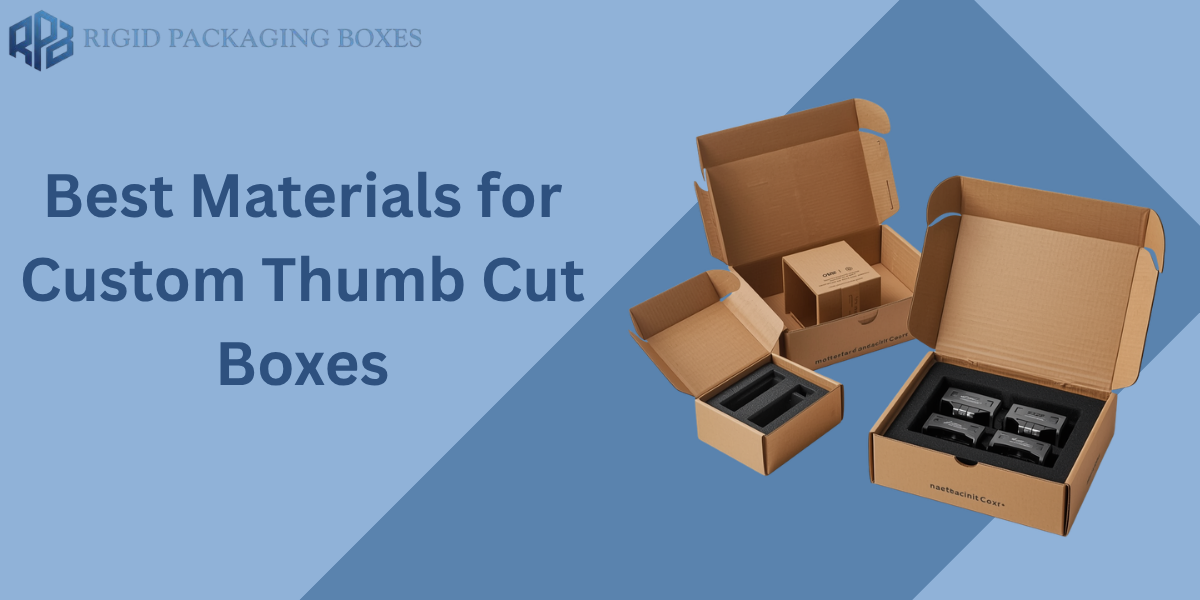
A thumb cut box may look like a small packaging detail. It is not. That little opening changes how the box feels, how easily it opens, and how polished your product looks in someone’s hand. But here is the part many brands miss: the thumb cut feature only works well when the material behind it is right.
Pick the wrong stock, and the box can feel weak, bend around the opening, or lose that clean finish you wanted. Pick the right one, and even a simple box feels more thoughtful. That is why material choice matters so much.
The Box Opens With the Thumb. The Experience Depends on the Material.
A thumb cut is there to make opening easier. Simple. But the material decides whether that opening feels smooth, sturdy, cheap, premium, natural, or protective. Think about it like a door handle.
A handle may look good, but if the door behind it is flimsy, the whole experience feels off. Thumb cut boxes work the same way. The shape helps with access. The material gives it strength, finish, and purpose.
What Actually Makes a Good Material for Thumb Cut Boxes?
Not every packaging stock handles a thumb cut well. A good material should do a few important things:
- hold the cut shape neatly
- stay strong around the opening area
- match the weight of the product
- support your print and branding needs
- fit your budget without hurting the look
That balance is what matters. Because a lightweight skincare carton and a luxury drawer box may both have a thumb cut, but they should not be made from the same stock.
Cardboard: The Safe Choice for Most Retail Boxes
If you want something practical, clean, and easy to customize, cardboard is usually the first material to look at. It is one of the most common choices for custom thumb cut boxes because it gives you a nice mix of structure, print quality, and affordability.
It works especially well for products like:
- skincare
- cosmetics
- small accessories
- stationery
- health items
- lightweight gifts
Cardboard gives a smooth surface for printing, folds neatly, and usually holds the thumb cut shape well. That makes it a strong option for retail packaging where appearance matters.
Why brands like it
It is flexible. You can print on it easily. You can add logos, colors, product details, and finishes without making the packaging too expensive. It also looks clean on shelves, which is a big plus for retail brands.
When it makes the most sense
Go for cardboard when your product is not too heavy, your design needs good print quality, and you want packaging that looks polished without going into luxury-level cost.
Practical tip
If your box will be opened often, make sure the cardboard grade is strong enough around the thumb cut area. A box can look great at first, then start wearing out fast if the stock is too light.
Kraft: Best When You Want a Natural Look
Some brands do not want glossy, sharp, polished packaging. They want something warmer. Something honest that feels eco-friendly before the customer even reads a word on the box. That is where Kraft works really well.
Kraft thumb cut boxes are a strong fit for:
- handmade products
- soaps
- candles
- organic items
- wellness brands
- small gifts
- sustainable packaging lines
The big appeal of Kraft is its raw, earthy look. It instantly gives the packaging a more natural feel. That makes it a favorite for brands that want simplicity and sustainability to show through the design.
What makes Kraft different
Kraft is less about flashy printing and more about character. It looks best with minimal designs, darker inks, softer branding, and clean layouts. If your goal is a natural brand image, kraft can do that beautifully.
Practical tip
Do not expect Kraft to behave like bright white premium board. Colors will look different on it. So if branding depends heavily on very vibrant printing, cardboard may be a better fit.
Corrugated: Built for Shipping, Not Just Looks
Now let’s talk about strength. If the main goal is protection, corrugated is usually the better choice.
This material is thicker and tougher than standard retail carton stock, which makes it ideal for boxes that need to survive shipping, stacking, and handling.
Corrugated thumb cut boxes are often used for:
- ecommerce packaging
- subscription boxes
- mailer boxes
- promotional kits
- electronics accessories
- products that need extra protection
A thumb cut on corrugated packaging helps the box open more easily without taking away from the strength of the structure. That matters a lot when the customer receives a solid box and still wants a clean opening experience.
Why it work so well
Corrugated packaging protects first. But when designed well, it can still feel branded and intentional. It is a smart choice for businesses that ship products directly and want a box that holds up through transit.
Practical tip
If you are using corrugated for presentation as well as protection, pay extra attention to the outer print finish and box design. Corrugated can look great, but it usually needs a stronger design direction to feel refined.
Rigid Stock: When You Want the Box to Feel Premium
Some products need packaging that does more than protect. They need packaging that makes an impression. That is where rigid stock stands out.
Rigid thumb cut or thumb notch boxes are often used for:
- jewelry
- perfumes
- watches
- luxury gifts
- electronics
- PR kits
- premium presentation boxes
This material is much thicker and heavier than standard cardboard. It feels more substantial in the hand, which instantly changes how the product inside is perceived.
A rigid drawer box with a thumb notch, for example, feels smooth, clean, and premium in a way that standard folding cartons usually cannot match.
Why do premium brands choose it
Because it adds weight. Not just physical weight. Perceived value, too. A product often feels more expensive when it comes in rigid packaging. That is why so many luxury brands use it for gifting, presentation, and high-end retail.
Practical tip
Rigid stock is worth considering when the packaging is part of the product experience, not just a container. If the unboxing moment matters, this material does a lot of heavy lifting.
Paperboard and Cardboard: Why People Mix Them Up
In everyday packaging talk, people often use paperboard and cardboard like they mean the same thing. And honestly, in many casual discussions, they do.
Most of the time, brands use these terms when talking about folding carton style packaging that is lightweight, printable, and retail-friendly.
For thumb cut boxes, the main point is simple: this type of stock works well when you need sharp printing, easy customization, and a structure that stays neat without feeling bulky.
So if someone says paperboard and someone else says cardboard, the conversation is often pointing in the same direction.
Which Material Is Best for Printing?
If print quality matters most, cardboard or premium paperboard is usually your best bet.
These materials give you a smoother surface, which means:
- cleaner artwork
- better color output
- sharper text
- stronger overall visual finish
Kraft can still be printed, but the brown base affects how colors appear. Corrugated can be branded well too, especially for shipping boxes, but it usually will not look as refined as retail carton stock.
Rigid packaging can look amazing, especially when wrapped in printed or textured paper, but it is more of a premium packaging route than a budget-friendly one.
Simple rule
If you want the artwork to do the talking, cardboard usually gives you the easiest and cleanest result.
Which Material Is Best for Eco-Friendly Packaging?
If your brand leans into sustainability, Kraft is usually the obvious choice. It gives that natural feel right away and works well with simple, eco-conscious branding.
- Recyclable cardboard is also a strong option, especially if you want a cleaner print surface without losing the sustainability angle.
- Corrugated deserves a place in the conversation too. It is widely recyclable and makes a lot of sense for shipping-focused packaging.
- Rigid boxes can sometimes be reused for longer, which adds value, but they are not always the first choice for brands trying to keep materials minimal.
Practical tip
Eco-friendly packaging is not only about the stock. It is also about using the right material for the right job. Overbuilding a box can work against the message.
Which Material Is Best for Heavy Products?
This is where many brands make bad assumptions.A nice-looking box is not always a strong enough box.
- If your product has more weight, or if it is delicate and needs better support, standard cardboard may not be enough on its own.
- Corrugated is usually better for heavier products that need shipping protection.
- Rigid stock is better when the product is premium and needs a stronger presentation as well.
Easy way to think about it
If your priority is protection in transit, look at corrugated.If your priority is protection plus luxury feel, look at rigid stock.
Which Material Feels the Most Luxurious?
Rigid stock without any question.It gives the box a solid build, a premium hand feel, and a more upscale presence. It also pairs well with high-end finishes like:
- foil stamping
- embossing
- soft-touch lamination
- foam inserts
- drawer-style structures
When a thumb notch is added to this kind of packaging, the opening feels smooth and intentional. That small motion can make the product feel more special before it is even touched.
Which Material Is Best When Budget Matters?
If you want the best balance of cost, looks, and performance, cardboard is usually the safest choice. It gives you room for strong printing, clean structure, and custom branding without pushing the packaging too far into premium pricing.
- Kraft can also be cost-effective, especially when the design is simple.
- Corrugated works well when the packaging job is more about protection and shipping.
- Rigid stock is usually the most expensive because it is built for a more premium result.
Practical tip
Do not choose the cheapest material first. Choose the material that fits the job first. A cheap box that does not suit the product often costs more in the long run.
How to Choose the Right Material Without Overthinking It
If you are stuck, ask yourself these questions:
- Is the product light or heavy?
- Is the box for a shelf or for shipping?
- Does the brand need a natural look or a premium look?
- Is print quality a top priority?
- Is sustainability part of the brand story?
- What budget range makes sense for this packaging?
Those answers usually point you in the right direction fast.Here is the easy version:
- Cardboard works best for everyday retail packaging with strong print quality.
- Kraft works best for natural-looking and eco-friendly packaging.
- Corrugated works best for shipping and subscription boxes.
- Rigid stock works best for luxury and presentation-focused packaging.
That is the clearest way to break it down.
Why This Choice Matters More Than It Seems
Most people think they are choosing a box material.What they are really choosing is a customer experience.
- A weak stock can make the thumb cut feel annoying.
- A good stock makes opening feel effortless.
- A plain material can make the product feel ordinary.
The right one can make the same product feel more thoughtful, more premium, or more aligned with the brand. That is why material selection is not just about packaging function. It is also about perception. At Rigid Packaging Boxes, this is one of the first things to get right.
Final Take
The best material for custom thumb cut boxes depends on what your product needs most.
- If you want strong retail printing and flexibility, go with cardboard.
- If you want a natural and eco-conscious look, kraft is a smart choice.
- If shipping protection matters most, corrugated makes more sense.
- If you want the box to feel premium the moment someone picks it up, rigid stock is hard to beat.
The thumb cut may be a small feature. But the material behind it decides whether that feature feels smooth, strong, cheap, premium, practical, or forgettable. And that is exactly why this decision matters.